This post is all about how to protect chickens from hawks.
Safeguarding Your Feathered Friends: How to Protect Chickens from Hawks
If you’re a proud chicken owner, you know that the joy of raising these delightful birds comes with its fair share of challenges. One of the most pressing concerns for chicken keepers is protecting their flocks from natural predators, and among the most formidable of these are hawks.
With their keen eyesight and powerful talons, hawks pose a significant threat to free-range chickens, especially if you’re not prepared.
In this blog post, we’ll explore effective strategies and practical tips to safeguard your chickens from hawks, ensuring that your flock remains healthy, happy, and safe. Whether you’re a seasoned chicken keeper or new to the world of poultry, these insights will help you create a secure environment for your feathered friends.
Created Covered Free Range Areas
The most secure way to protect your chickens is to keep them in a covered area. However, chickens naturally enjoy foraging through grass and hunting for bugs. So keeping them cooped up in a small run all day is certainly not ideal.
As a safe compromise, you could create a “Free-range” space in a grassy area, but keep it covered and contained. This creates the best of both worlds. Foraging time for your chickens, extra roaming space, but safe from predators!
You can use hardware cloth, chicken wire, or bird netting to accomplish this. Keep in mind that Hardware cloth is predator proof, whereas the other options are not. However, all 3 would be protection from hawks and other aerial predators. (Reminder: This is just for creating a safe place for them to forage at points of the day. Your actual chicken coop and run should be designed to be as predator proof as possible, using hardware cloth, dig skirts, etc.)
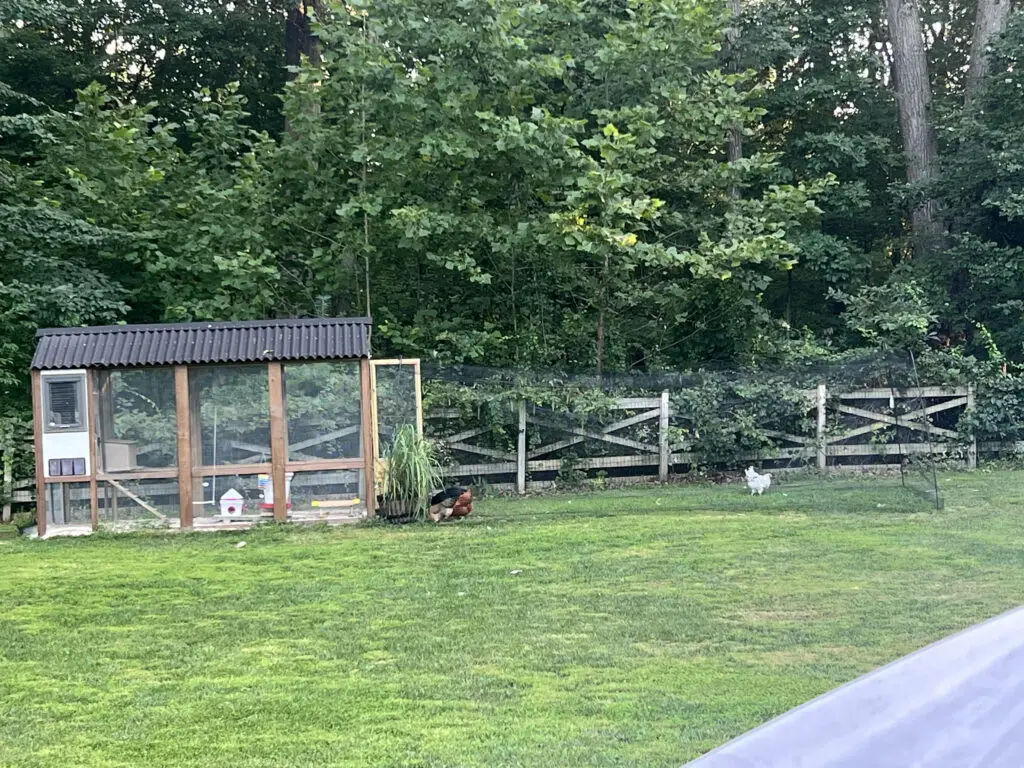
I currently have a DIY set up using black bird netting. I allow them to roam freely under light supervision, but I always make sure they’re not outside unsupervised. To keep them safe, I use stakes placed around the yard, wrapping netting around them and adding an additional layer of netting on top to create a roof.
No products found.
Having contained roaming areas is a great solution that can keep your flock safe from hawks, but it may not be a feasible or desired option for everyone. So let’s explore some other options of how to protect chickens from hawks.
Create Safe Hiding Spots
Shelter and Roosts: Provide ample shelters and roosting spots where chickens can quickly take cover if they sense danger.
Bushes and Trees: Plant shrubs, bushes, or trees around the coop and run to offer natural cover and hiding spots.
Consider purchasing a pop up tent. This will give your chicks a safe place to run and hide from aerial predators if they sense one is nearby. This one from Crown Shades is an affordable option that works great, and SUPER easy to put up, and take down.
No products found.
Use Decoys and Scare Tactics
Hawk Decoys
Place decoy hawks or other predator birds (like this Owl decoy) around your property. These can sometimes deter real hawks from approaching.
Reflective Objects
Hang reflective objects, such as CD discs or aluminum foil strips, to create flashes of light that can scare hawks away.
Wind-Spinners and Kites
- Wind-Spinners: These create unpredictable movements and flashes of light that can startle hawks and deter them from approaching.
- Predator Kites: Kites shaped like large birds of prey or other animals can be flown around the chicken area to simulate the presence of predators and discourage hawks.
Audio Deterrents
- Alarm Sounds: Devices that emit loud, sudden noises or predator calls can scare hawks away. These sounds mimic the calls of other birds or animals that might pose a threat to hawks.
- Motion-Activated Noisemakers: These devices produce a loud noise when they detect movement, startling hawks and discouraging them from entering the area.
Visual Deterrents
- Reflective Tape or Streamers: Hanging shiny tape or streamers from trees or posts can create reflections and movement that can dissuade hawks from coming near.
- Fake Eyes: Some products feature large, fake eyes that can be hung in trees or on fences. The sight of these “eyes” can make hawks think a larger predator is nearby.
Scarecrow Figures
- Traditional Scarecrows: While often associated with farms, traditional scarecrows with their exaggerated features can help deter hawks. Position them in visible spots around the chicken area.
- Motion-Activated Scarecrows: Modern scarecrows equipped with movement sensors can create sudden motions or sounds to frighten hawks.
Ultrasonic Repellents
- Ultrasonic Devices: These emit high-frequency sounds that are inaudible to humans but disturbing to birds, including hawks. Place them in areas frequented by hawks to keep them at bay.
Automatic Sprinklers
- Motion-Activated Sprinklers: These sprinklers release a burst of water when motion is detected, startling hawks and keeping them away from the chickens.
One of the best hawk deterrents are these fun Wacky Waving Inflatable Dancing Tube Guys! Not to mention they add some fun flare to your yard!
No products found.
Employ Guard Animals
- Livestock Guardian Dogs: Certain breeds of dogs are known to protect poultry and can deter hawks with their presence. One of the most common Livestock Guardian Dog Breeds are the Great Pyrenees. They are beautiful dogs, and great protectors of your flock. Just be sure to train them properly as dogs can also harm your chickens.
- Guinea Fowl: These birds are known to be vigilant and can act as a natural alarm system, alerting chickens (and you) to the presence of predators.
- Roosters: Consider adding a rooster to your flock to protect your hens from predators. Roosters play a crucial role in protecting chickens from hawks by acting as vigilant sentinels. Their sharp eyesight allows them to spot approaching predators from a distance, and their loud, distinctive calls serve as an alarm, alerting the flock to seek cover. When a hawk is spotted, roosters often display aggressive behaviors, such as flapping their wings and charging at the threat, to drive the predator away and safeguard their hens.
Monitor and Maintain Vigilance
- Regular Check-Ups: Frequently inspect your coop and run for any signs of damage or gaps that could allow hawks access.
- Watch for Signs: Be alert to the presence of hawks in the area and take action if you notice any patterns or attempts to prey on your chickens.
Implementing these measures can help create a safer environment for your chickens and reduce the risk of hawk attacks. Each flock and property is unique, so it may be beneficial to use a combination of these strategies to best suit your specific needs.
Now that you know how to protect chickens from hawks, hopefully you can free-range your chickens with confidence!

15 Thoughtful Gifts For Gardeners To Grab Now
This post is all about gifts for gardeners. Best Gifts For Gardeners If you’re looking…

8 Best Companion Plants For Green Beans For Big Harvests
This post is all about companion plants for green beans. If you’re growing green beans…

The Best Companion Plants for Tomatoes (And What to Avoid)
This post is all about best companion plants for tomatoes. Best Companion Plants For Tomatoes…

10 Herbs To Plant Around Your Chicken Coop – & Why!
This post is all about what herbs to plant around your chicken coop. Best Herbs…
How To Keep Chickens Cool In The Summer Heat – 10 Game Changing Hacks
This post is all about how to keep chickens cool in the summer. Ways To…
10 Best Predator Proof Chicken Coop Essentials
This post is all about predator proof chicken coop essentials. Predator Proof Chicken Coop Essentials…
What You’ll Find Here
Are you eager to embrace the homesteading lifestyle, but worried about not having enough land? Fear not, for you don’t need vast acres to become a mini homesteader. With a little creativity and effort, you can transform your backyard into a thriving homestead, complete with chickens and a garden. Imagine the satisfaction of growing your own food and using it to whip up delicious, healthy meals. And if you’re ready to take the plunge and raise backyard chickens, you’ve come to the right place. This is where we’ll guide you through the world of modern homesteading.
Follow Us On Tik Tok and Instagram!