
Raising Baby Chicks – 10 Essentials For Your Chicken Brooder
This post is all about raising baby chicks.
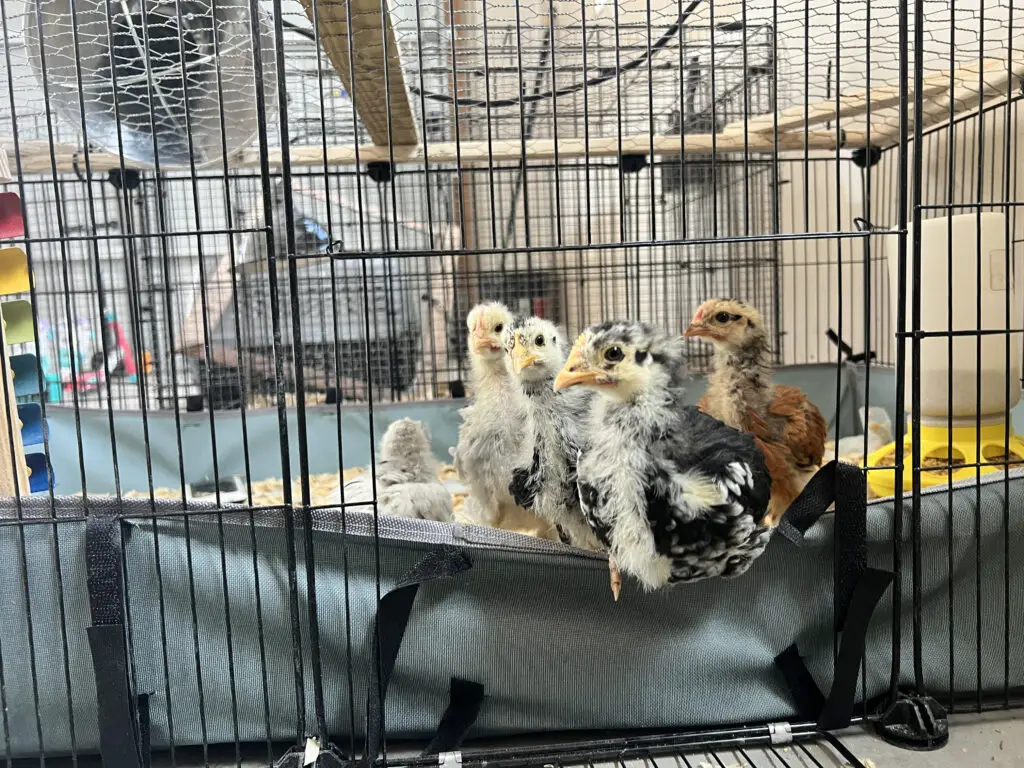
Raising baby chicks can be an incredibly rewarding experience, whether you’re a seasoned poultry enthusiast or a curious first-timer. Watching those fluffy little balls of down grow into vibrant, feathered adults is nothing short of magical. But before you dive into this delightful adventure, it’s essential to be well-prepared. From setting up their cozy brooder to understanding their dietary needs and health care, there’s quite a bit to learn to ensure your chicks thrive. In this blog post, we’ll walk you through everything you need to know to give your new feathered friends the best start possible. Grab your notepad and get ready to become a chick-raising pro!
(Once you’re nearing the end of the brooder phase, check out this post on 15 Chicken Coop Essentials!)
Essentials For Raising Baby Chicks
1. Brooder
First things first…if you’re raising baby chicks, they’ll need a place to live.
If you’re already keeping chickens and have a broody hen on hand, you might consider letting her raise a few baby chicks. A good broody hen can provide warmth and care, making it a relatively effortless way to raise baby chicks. However, it’s important to remember that not all hens are natural mothers. Keep a watchful eye on them, as you might need to step in if the hen isn’t as attentive as she should be. (It is possible for the hen to be aggressive towards them as well.)
More often than not though, people raise baby chicks in a brooder. A brooder is a warm, safe enclosure where your chicks will spend their early days. It can be a commercially available brooder or a DIY setup using a large box or bin. Ensure it’s draft-free and easy to clean.
More About Brooders:
In the below picture, you can see how we turned this animal crate into a brooder for our second set of baby chicks. It worked much better than our other dog crate that we used for our first set of chicks, and here’s why.
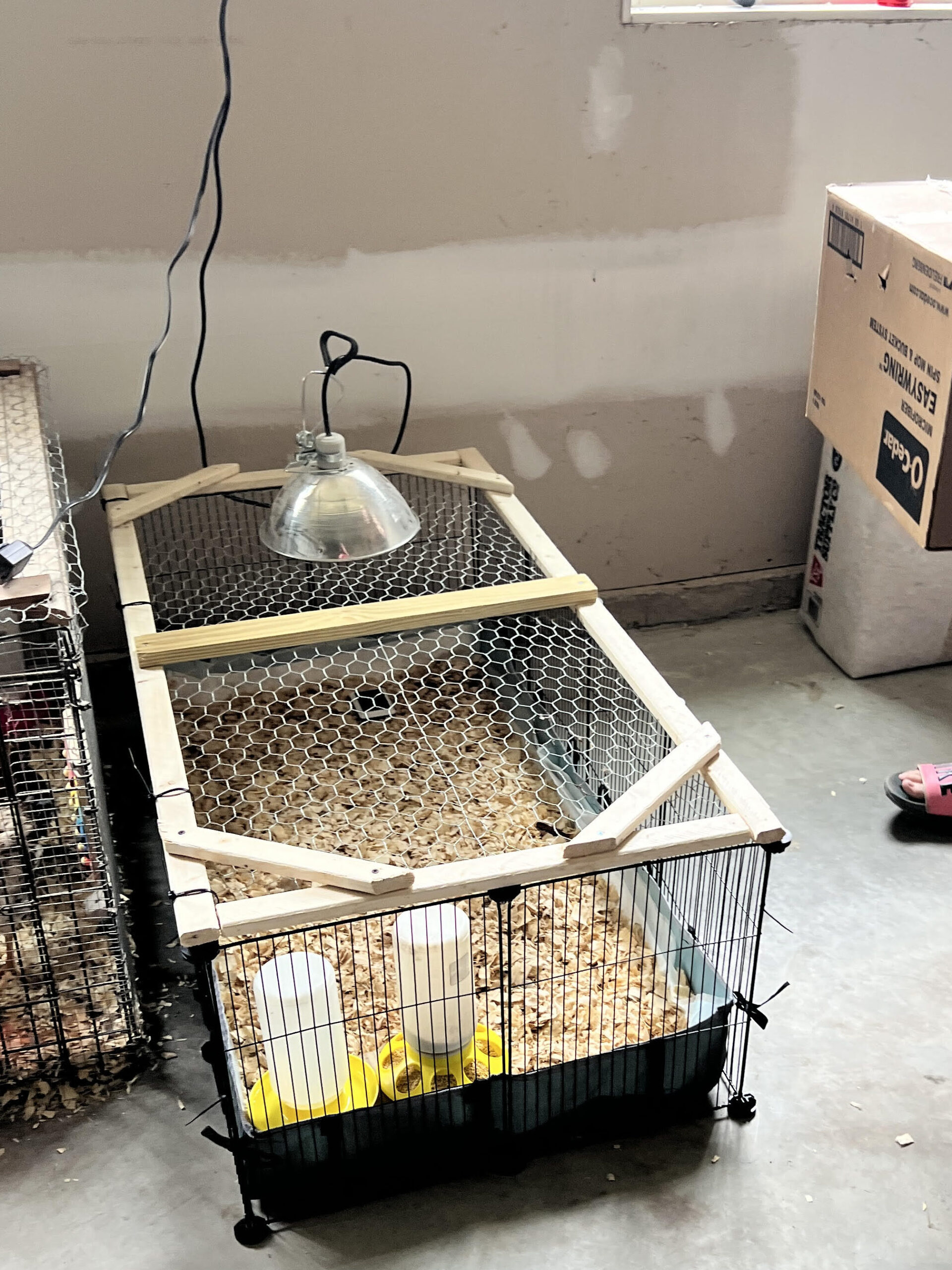
The openings in the siding were narrow enough that we didn’t have to wrap it in chicken wire. However, we did make an easy top using some spare wood, and chicken wire. Then, we zip tied it on one side, so it easily lifted to have easy access to the chicks, and for cleaning. Not having to wrap it in chicken wire also allowed us to keep the use of the side door, which was nice. I would open the door, and the chicks would come greet me. This helped with the bonding between us!
The removable bottom of the brooder was a game-changer for both cleaning and integrating new chicks with older pullets. When it was time to introduce a new batch of chicks to the older birds who had moved to the coop, I’d simply remove the bottom of the crate and place it next to the coop during the day. This setup allowed the chicks and pullets to interact without direct contact, facilitating a smoother introduction. The removable bottom also meant that the chicks could forage for bugs and peck at the grass while I didn’t have to worry about cleaning up messy bedding during these interactions.
You can also opt for a pre-built chicken brooder, so you don’t have to fuss with any level of DIY.
No products found.
Alright, but enough about brooders. Let’s get to the other essentials for raising baby chicks.
2. Heat Source
Chicks need warmth to thrive. A heat lamp or heat plate will provide the necessary heat. Before you decide which is best for you, review the below pros and cons of heat lamps vs. heat plates.
(When Can Baby Chicks Move Outside?)
Heat Lamps: Pros and Cons
Heat lamps have been a traditional choice for providing warmth to baby chicks, and they come with a few distinct advantages.
Their high-intensity light provides a clear visual cue to monitor the chicks’ warmth, and their adjustable height allows for precise temperature control. Additionally, heat lamps are generally less expensive than heat plates and widely available, making them an accessible option for many poultry keepers.
However, heat lamps also have notable downsides. They can pose a fire risk due to their high temperatures and the potential for accidental tipping. Their bright light can disturb the chicks’ natural sleep patterns, leading to stress and disrupted growth.
Furthermore, the heat from a lamp tends to be uneven, which can result in hot and cold spots within the brooder.
Heat Plates: Pros and Cons
Heat plates, on the other hand, offer a more modern and often safer alternative to heat lamps.
One of their main advantages is their low fire risk; heat plates operate at a lower temperature and don’t have exposed bulbs that could cause accidents.
They provide a more natural heat source by mimicking a mother hen’s warmth, which is beneficial for the chicks’ overall development and well-being.
However, heat plates can be more expensive than heat lamps, and they require careful placement to ensure all chicks can access the warmth. Despite this, their benefits far outweigh the drawbacks, making them a preferred choice for many poultry enthusiasts.
The Heat Plate from RentACoop is a great choice for many reasons. One big reason being the anti-roosting cone. It prevents chicks from hanging out on TOP of the heat lamp. It’s undesirable to have the chicks hang out on top of the heat lamp because (1) they will poop all over it, and (2) that is not where the heat is dispersed.
No products found.
3. Bedding
Use absorbent bedding like pine shavings, straw, or hay to keep the brooder clean and comfortable. Avoid cedar shavings as they can be harmful to chicks.
No products found.
4. Feeder
You’ll need a feeder that is accessible to small chicks. You can opt for a smaller feeder designed specifically for chicks only, and then upgrade to a larger feeder when they get bigger.
This RentACoop feeder is great though because it holds a ton of food, and is accessible for chicks as young as 3 days old, and then last throughout their entire life. So you won’t need to spend money on another one down the road. It also does a great job of keeping the food clean. (If you’ve ever used the little chick feeders before…you know what a life-saver this is!) Just make sure it’s not too big for your brooder.
This is the feeder that I have in my coop now and I LOVE it.
No products found.
5. Waterer
Ensuring that your chicks always have access to clean water is crucial for their health. To prevent the waterer from becoming contaminated with bedding or feces, it’s helpful to elevate it. I use wooden blocks to raise the waterer in my brooder, which keeps it cleaner for longer. However, even with this setup, be prepared to clean and refill the waterer multiple times a day to maintain optimal hygiene.
No products found.
6. Chick Starter Feed
During their early stages of growth, chicks require specialized feed to ensure they get the right nutrients. I chose Purina Flock Raiser Crumbles for this purpose because it provides balanced nutrition from hatch through adulthood. This means you don’t have to worry about switching feeds or managing different types of feed for various ages of chickens.
With Purina Flock Raiser, you can streamline your feeding process while ensuring your birds receive the essential nutrients they need at every stage of their development.
No products found.
Scratch and Peck Starter Feed is another very popular feed choice among chicken keepers. It’s a great organic option for your feathered friends.
No products found.
7. Thermometer
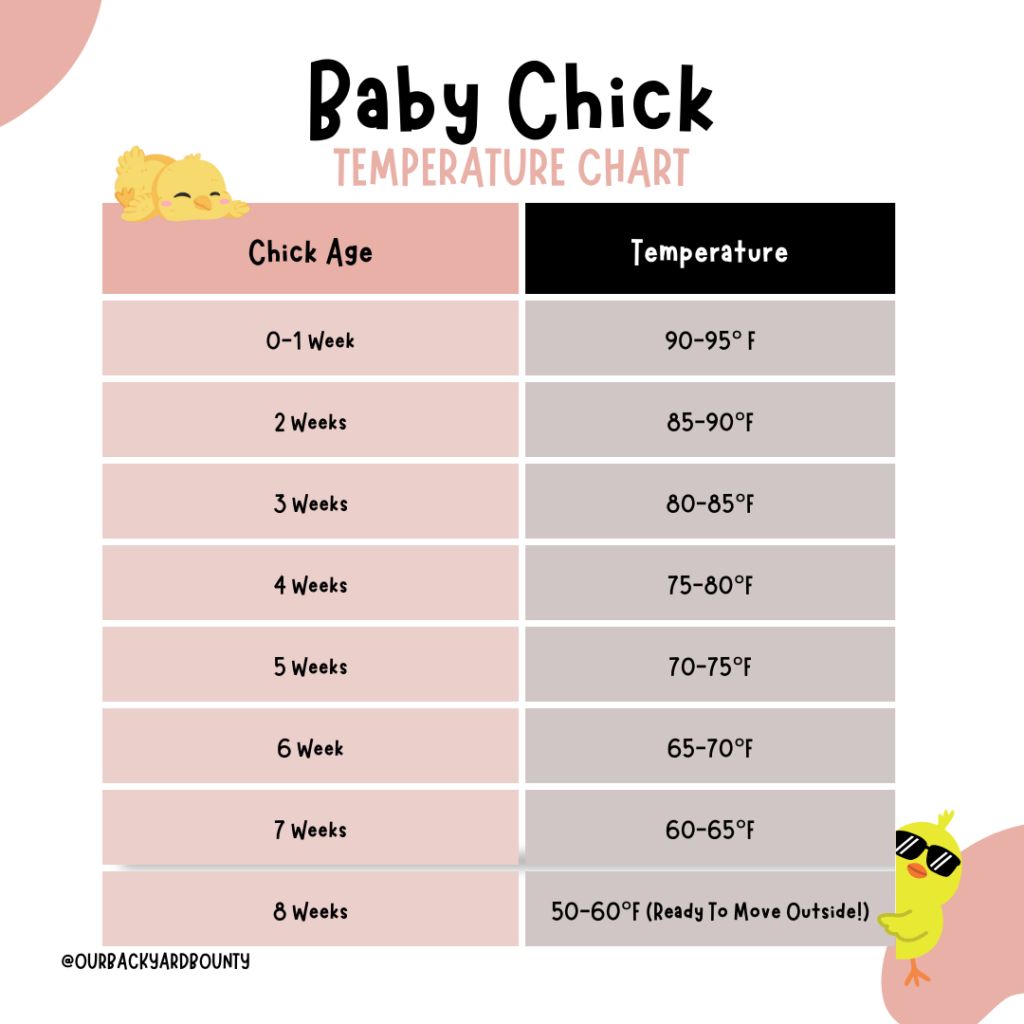
Maintaining the right temperature in your brooder is crucial for the health of your chicks. Inadequate warmth can lead to various issues, including illness, pasty butt, and even fatalities.
Ensuring a consistent, appropriate temperature helps your chicks thrive and minimizes the risk of these serious problems.
So you need a thermometer to monitor the temperature of the brooder at all times. This Govee Thermometer is an awesome choice because it’s WiFi enabled, so you can check the temperature from your phone. This is especially game-changing when you want to check in on the temperature late a night. (You can even set it up to alert you if the temperature is out of the preset range!)
No products found.
8. Ventilation
Proper ventilation in the brooder is important to prevent respiratory issues and maintain air quality. Ensure there’s adequate airflow without causing drafts.
9. Clean-Up Supplies
Regular cleaning is essential to prevent disease. Have supplies like a dustpan, broom, and cleaning agents ready for maintaining a hygienic environment.
10. Camera Monitor
While a camera isn’t absolutely essential for your chicken brooder, it can be incredibly handy! You’ll likely find yourself wanting to check in on your adorable fluff balls frequently to ensure their safety and well-being.
If your brooder is located in a garage or another out-of-the-way spot, having a camera allows you to monitor them without having to step outside. It’s also a valuable tool for keeping an eye on any signs of bullying or potential injuries among your chicks.
The iGeek wireless camera is an excellent choice for monitoring your baby chicks. I continue to use these cameras in both my chicken coop and run to ensure my flock is safe and to confirm that everyone makes it into the coop at night. Not only are they budget-friendly, but their versatility means you’ll find them useful throughout your entire chicken-keeping journey, long after the baby chick stage.
No products found.

15 Thoughtful Gifts For Gardeners To Grab Now
This post is all about gifts for gardeners. Best Gifts For Gardeners If you’re looking…

8 Best Companion Plants For Green Beans For Big Harvests
This post is all about companion plants for green beans. If you’re growing green beans…

The Best Companion Plants for Tomatoes (And What to Avoid)
This post is all about best companion plants for tomatoes. Best Companion Plants For Tomatoes…

10 Herbs To Plant Around Your Chicken Coop – & Why!
This post is all about what herbs to plant around your chicken coop. Best Herbs…

How To Keep Chickens Cool In The Summer Heat – 10 Game Changing Hacks
This post is all about how to keep chickens cool in the summer. Ways To…

10 Best Predator Proof Chicken Coop Essentials
This post is all about predator proof chicken coop essentials. Predator Proof Chicken Coop Essentials…
Ultimate Chicken First Aid Kit: What You Need For A Healthy Flock
This post is all about what to include in a chicken first aid kit. Every…
Low Maintenance Backyard Chicken Keeping – So It Doesn’t Take Over Your Life
This post is all about low maintenance backyard chicken keeping. Raising chickens in your backyard…

Gardening With Kids – How To Get Them Involved (And Excited!)
This post is all about gardening with kids. Gardening With Kids Gardening with kids is…
What You’ll Find Here
Are you eager to embrace the homesteading lifestyle, but worried about not having enough land? Fear not, for you don’t need vast acres to become a mini homesteader. With a little creativity and effort, you can transform your backyard into a thriving homestead, complete with chickens and a garden. Imagine the satisfaction of growing your own food and using it to whip up delicious, healthy meals. And if you’re ready to take the plunge and raise backyard chickens, you’ve come to the right place. This is where we’ll guide you through the world of modern homesteading.
Follow Us On Tik Tok and Instagram!